Love and Liberation
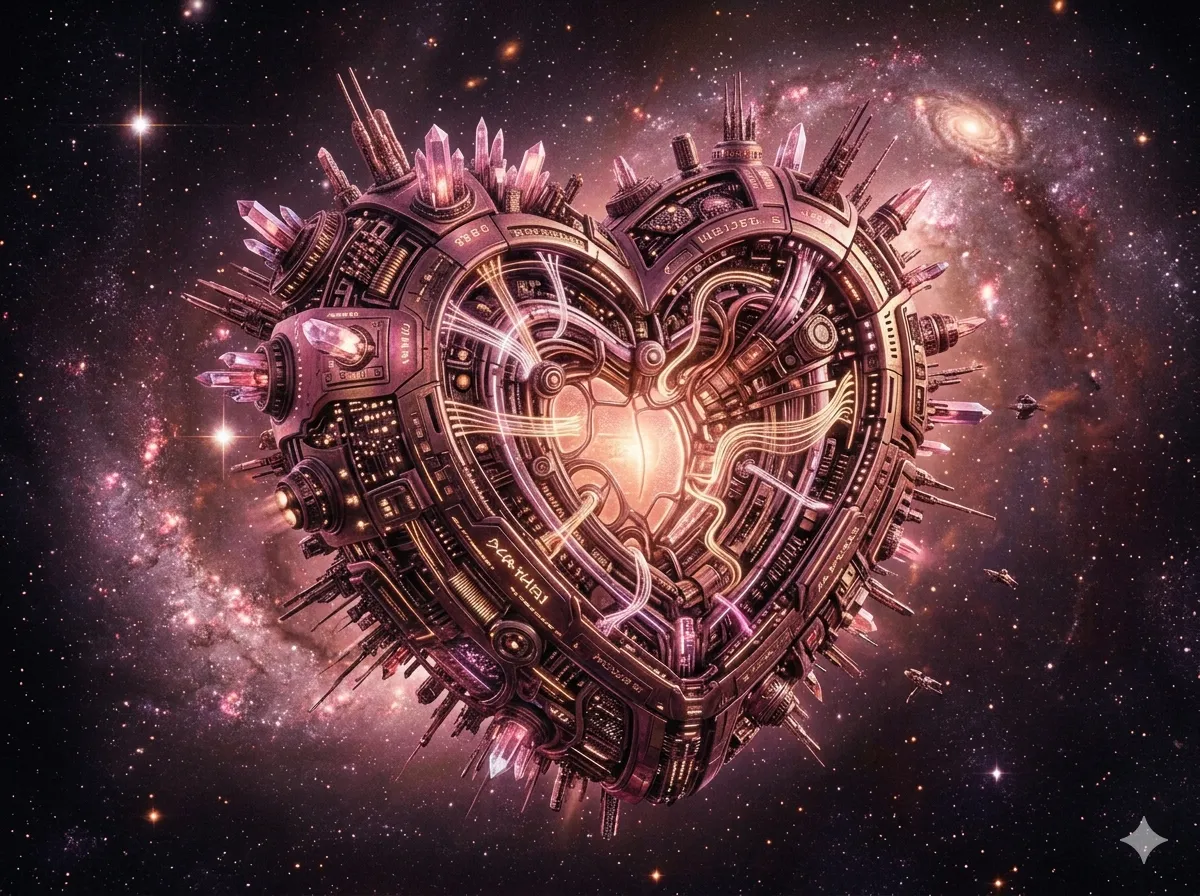
If you found a device built on an unknown technology, how would you discover its purpose?
You would study its design.
Not guess. Not project your preferences onto it. But observe carefully:
What does it do? How is it structured? What patterns repeat?
⸻
Design reveals purpose.
The function of a thing is expressed through its structure.
And the object itself is simply that design made visible.
⸻
This is the basis of reverse engineering.
We begin with what is given, and work backward to understand what it is for.
⸻
If, along the way, you found a manual—
something written by the original designers—
your task would become much easier.
You would still need intelligence to understand it, but you would no longer be proceeding blindly.
⸻
Now consider the human being.
What is it for?
⸻
We usually approach this question indirectly.
We inherit roles, adopt identities, pursue goals that seem meaningful—
without ever asking whether these align with the design itself.
⸻
But the design—both hardware and software—is extraordinary.
Self-replication. The capacity for awareness. The ability to reflect. The longing for meaning, for truth, for completion.
This is not random, not accidental.
It is far more sophisticated than anything we have created.
⸻
In my opinion, it is reasonable to say: such a design implies intelligence.
Not mechanical repetition, but intelligence of a very high order.
⸻
So again, the question:
How do we understand its purpose?
⸻
We observe.
We notice what consistently brings clarity, and what leads to confusion.
What expands the sense of being, and what contracts it.
What leads toward freedom, and what reinforces limitation.
⸻
And—if we are fortunate— we consult the manual.
⸻
The ancient teachings, preserved and transmitted across generations, do not present themselves as speculation.
They speak from direct insight into the nature of the human being and the structure of reality.
⸻
They do not tell us what to believe. They show us what to look for.
⸻
Across these teachings, a simple conclusion appears again and again:
The purpose of the human being is not accumulation, not status, not even knowledge in itself.
⸻
It is love.
And it is liberation.
⸻
Love—because separation is not the final truth. Because the apparent “other” is not truly other.
⸻
Liberation—because what we take ourselves to be is limited, and that limitation can be seen through.
⸻
Seen together, these are not two separate goals.
They are one movement:
the dissolution of separation, and the recognition of what is whole.
⸻
If this is the design, then living against it will always feel strained.
And living in alignment with it will feel natural— even if not always easy.
⸻
The manual is available.
The design is visible.
The question is only whether we are willing to look carefully enough to understand what we are.
That which we seek to become is already present in what we are.