Neither Coming nor Going (Unfolding)
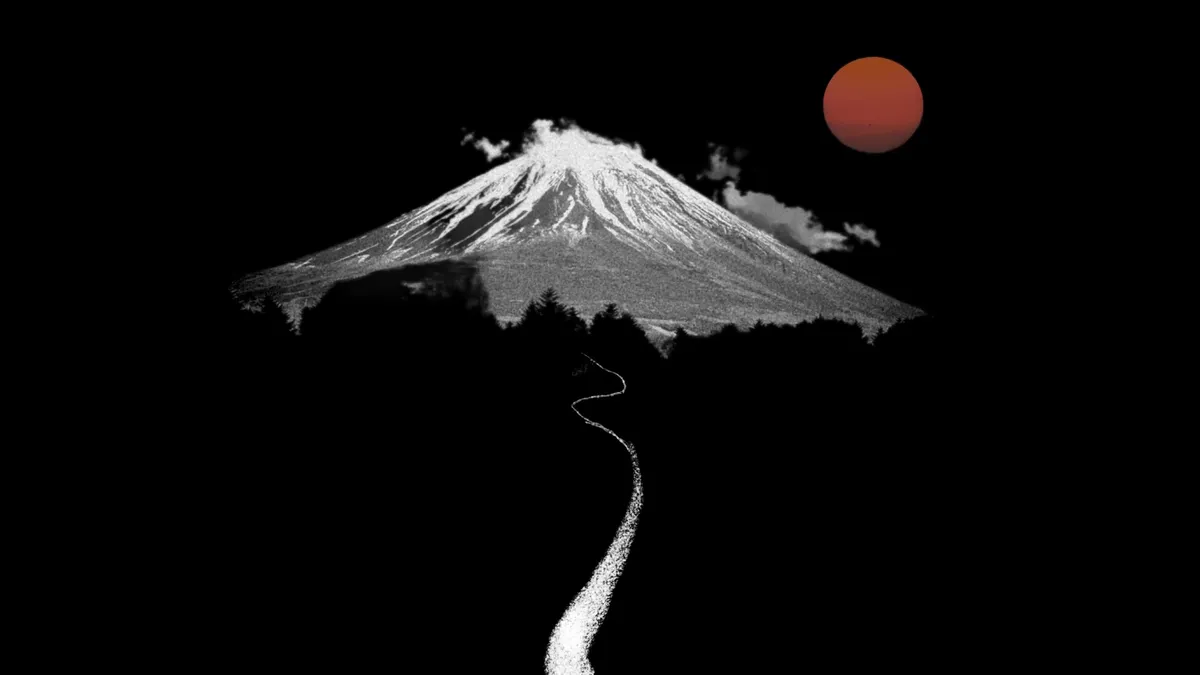
The reflection questions a deeply ingrained assumption: that spiritual understanding requires movement along a path. This assumption appears reasonable. If something is not yet known, it seems natural to suppose that one must move toward it—progressing from ignorance to knowledge, from confusion to clarity. This gives rise to effort, direction, and the sense of advancing or falling behind.
However, the post invites a closer examination of what this “movement” actually consists of. When we speak of progress, we are usually referring to changes in thought, understanding, or experience. New insights arise, previous assumptions are revised, and a narrative of development takes shape. But all of these occur within experience and are known as they happen.
This leads to a key question: does the knower of these changes participate in the movement, or is it simply present while the movement appears?
Every sense of transition—“I was there,” “I am here,” “I will arrive”—is itself a thought. It appears in the present moment and is known like any other mental event. The feeling of distance, of being separate from a goal, is also something that arises within awareness. It is experienced, not independently existing.
The Upaniṣadic tradition addresses this directly by distinguishing between what is subject to change and what is not. The Chāndogya Upaniṣad expresses this through the mahāvākya tat tvam asi—“That thou art.” The implication is that what is sought is not separate from the seeker. If this is so, then the notion of traveling toward it becomes questionable.
The idea of a path depends on distance: a starting point, an endpoint, and a process connecting the two. But if what is being sought is already present—not as an object to be reached, but as the very basis of experience—then no actual movement can bring one closer to it. Movement may occur in thought and experience, but these movements do not affect what is already the case.
This does not mean that learning, practice, or change are invalid. They continue to take place. One may study, reflect, and refine understanding. But these activities unfold within the same field in which the initial confusion appeared. They do not lead to a new location; they clarify what has always been present.
A useful way to examine this is to observe the sense of seeking itself. The feeling of “I am trying to get somewhere” can be noticed as it arises. It has a certain structure—an orientation toward the future, a sense of lack in the present, and an imagined completion. But all of this is experienced here and now. The seeking does not occur outside of awareness; it is contained within it.
From this perspective, the “path” begins to lose its literal meaning. It is not that something has been rejected or denied, but that the assumption of distance no longer holds. Without distance, the idea of traveling toward a goal becomes unnecessary.
In my opinion, this is the central shift indicated by the reflection. It does not deny the appearance of movement—thoughts continue to change, experiences continue to unfold—but it questions whether this movement corresponds to an actual progression toward something separate. When examined carefully, it becomes clear that nothing essential moves closer or further away.
Seen in this way, the concluding statement is precise rather than poetic. Nothing comes and nothing goes, not because experience is static, but because that which knows experience is not subject to coming or going. Everything appears within it, but it does not move with what appears.
Back to the original reflection