The Moon and the Clouds
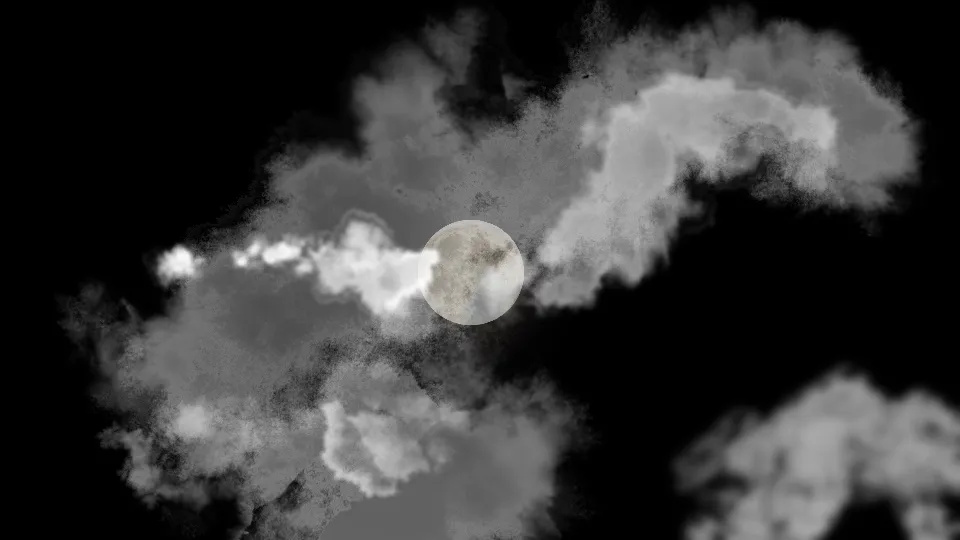
Last night, watching the sky, it looked like the moon was moving.
Slowly drifting, slipping in and out of the clouds. Sometimes disappearing completely; other times shining brightly again.
It looked like it was traveling.
But after a while, something became obvious.
The moon was not moving; the clouds were.
They passed in front of it, changing its shape, dimming its light, revealing it again.
And because attention followed the movement, it seemed as though the moon itself was in motion.
⸻
Something similar happens throughout the day.
Thoughts move; sensations shift; moods pass through.
Attention follows these changes.
And what is constant begins to feel as though it is changing.
A feeling arises: “I am restless.” “I am unclear.” “I am disturbed.”
But look more carefully: is it really you that is moving?
Or are these thoughts like clouds, passing through something that does not move at all?
⸻
The clouds never stay; they gather, scatter, and dissolve.
The sky does not follow them.
The moon does not chase them.
⸻
In the same way, thoughts and experiences move on their own.
They come into view, take shape, and pass away.
But what knows them—does it move with them?
It can seem that way.
When a thought becomes intense, it feels as though everything is involved in it.
As though it defines the whole field.
But when it passes, what remains has not been altered in the least.
⸻
The moon was never disturbed by the clouds.
It did not become brighter when they cleared, or dimmer when they gathered.
It simply appeared that way.
In the same way, what you are does not move with what appears.
It only seems to, when attention follows the movement.
If this is noticed, even once,
the whole scene changes.
Thoughts can come and go. Experience can shift in any direction.
But something remains exactly as it is—
unmoving,
even while everything else passes.
Like the moon,
quietly present,
while the clouds move on.