Living Without Illusion
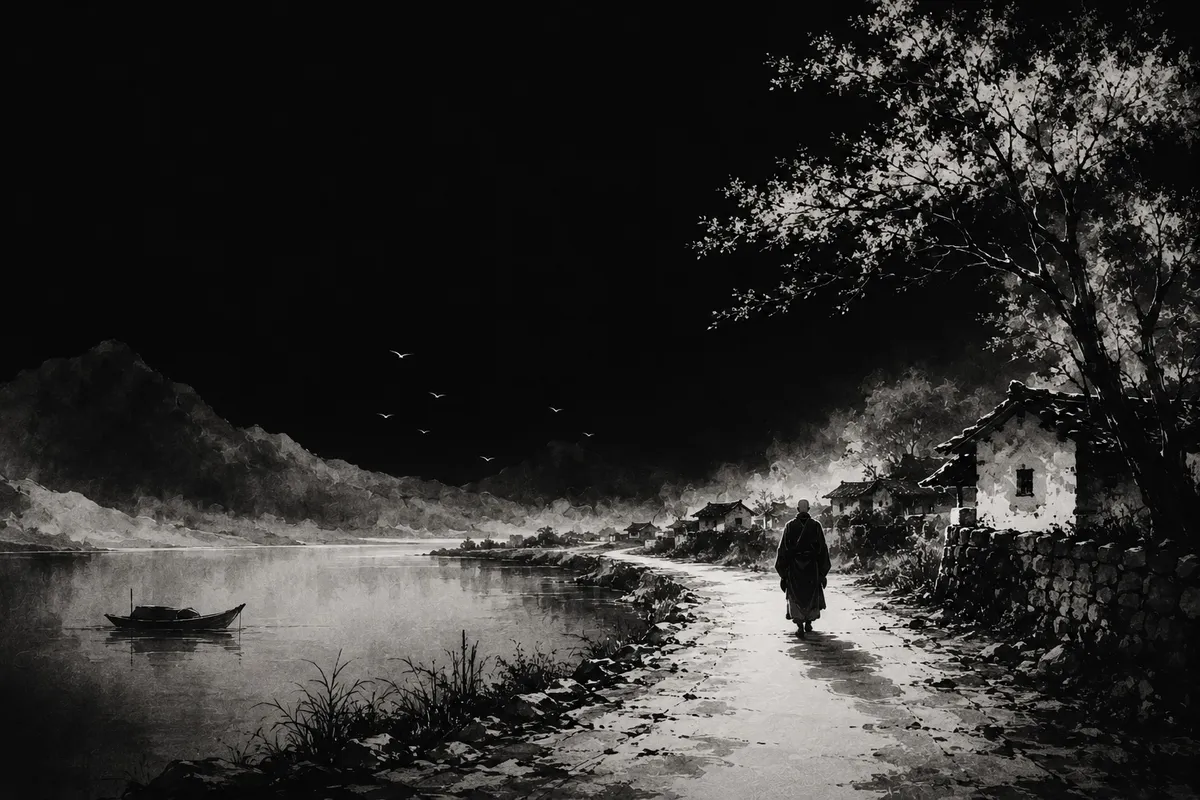
The recognition we have explored throughout this series does not remove the world:
- Mountains remain.
- People speak.
- Bodies age.
- Thoughts arise.
- Problems appear and are solved.
- Life continues.
What disappears is not the world; what disappears is confusion.
The Dream Continues
Many people imagine awakening as the destruction of ordinary life.
Quite the opposite—nothing needs to be destroyed.
The world was never the problem; only misunderstanding.
A dream recognized as a dream does not necessarily vanish; it simply loses its power to deceive.
Likewise, life continues:
- Joy comes.
- Sorrow comes.
- Success comes.
- Failure comes.
- The seasons change.
- Relationships change.
- The body changes.
But something fundamental has changed:
Experience is no longer burdened by the constant demand that it conform to our expectations.
Life is allowed to unfold.
Function Continues
Recognition does not produce passivity:
- Work is done.
- Meals are cooked.
- Bills are paid.
- Children are raised.
- Gardens are tended.
- Music is played.
- Conversations happen.
- Responsibilities remain.
The difference is subtle:
Action continues; but the sense of being the isolated doer gradually fades.
Life seems to live itself:
- Not perfectly.
- Not magically.
- Simply naturally.
- There is less friction.
- Less resistance.
- Less unnecessary suffering.
Thoughts Are Not Enemies
Thoughts continue. Emotions continue. Memories continue.
Nothing needs to be eliminated; nothing needs to be suppressed.
Thoughts become like clouds passing through the sky: useful when needed; ignored when not.
They no longer define who we are.
They no longer carry the same authority.
The mind becomes a servant instead of a master.
Like Humoring a Madman
Earlier we used an unusual example:
Suppose a madman runs down the street shouting that invisible enemies are chasing him.
A wise person does not argue.
Nor does he become frightened.
He may respond. He may speak kindly. He may even help.
But inwardly he is undisturbed, because he understands that the entire drama belongs to the madman's imagination.
Much of ordinary life is like this.
People become consumed by praise and blame.
- Politics
- Money
- Status
- Endless arguments
- Fear
- Ambition
- Competition.
One participates when necessary.
One responds appropriately.
One may even laugh, cry, and become deeply involved.
But inwardly there is a certain freedom: not indifference; not superiority.
Simply understanding.
The drama no longer has absolute reality.
Compassion Becomes Easier
Curiously, freedom does not make one cold.
Quite the opposite: when the burden of protecting a separate self begins to lighten, compassion becomes easier.
- People are forgiven more quickly.
- Their fears become understandable.
- Their anger becomes understandable.
- Their confusion becomes understandable.
After all, we have all mistaken shadows for reality. We have all suffered. We have all searched.
The need to judge others gradually gives way to understanding.
Nothing Special
Perhaps this is the greatest surprise: nothing extraordinary happens.
No halo appears. No cosmic music plays. No certificate arrives in the mail declaring enlightenment.
Life becomes remarkably ordinary:
- Tea tastes like tea.
- Rain feels like rain.
- Birds sing.
- Dogs bark.
- The sun rises.
- The sun sets.
The extraordinary is found in the ordinary.
Not because ordinary life became sacred; because it always was.
The Missing Step
At the beginning of this series, we questioned everything:
- Meaning
- Identity
- Knowledge
- Methods
- Even the seeker himself.
The purpose was never destruction; it was recognition.
And the purpose of recognition was never escape; it was freedom.
Not freedom from life; freedom within life.
The missing step was not hidden; it was overlooked.
What you have been seeking has never been absent.
And now, having reached the end of this series, perhaps nothing new has been added. Perhaps only something unnecessary has fallen away.
Life continues.
The world appears.
And in the midst of it all—
there is peace.