Music to Silence and Back
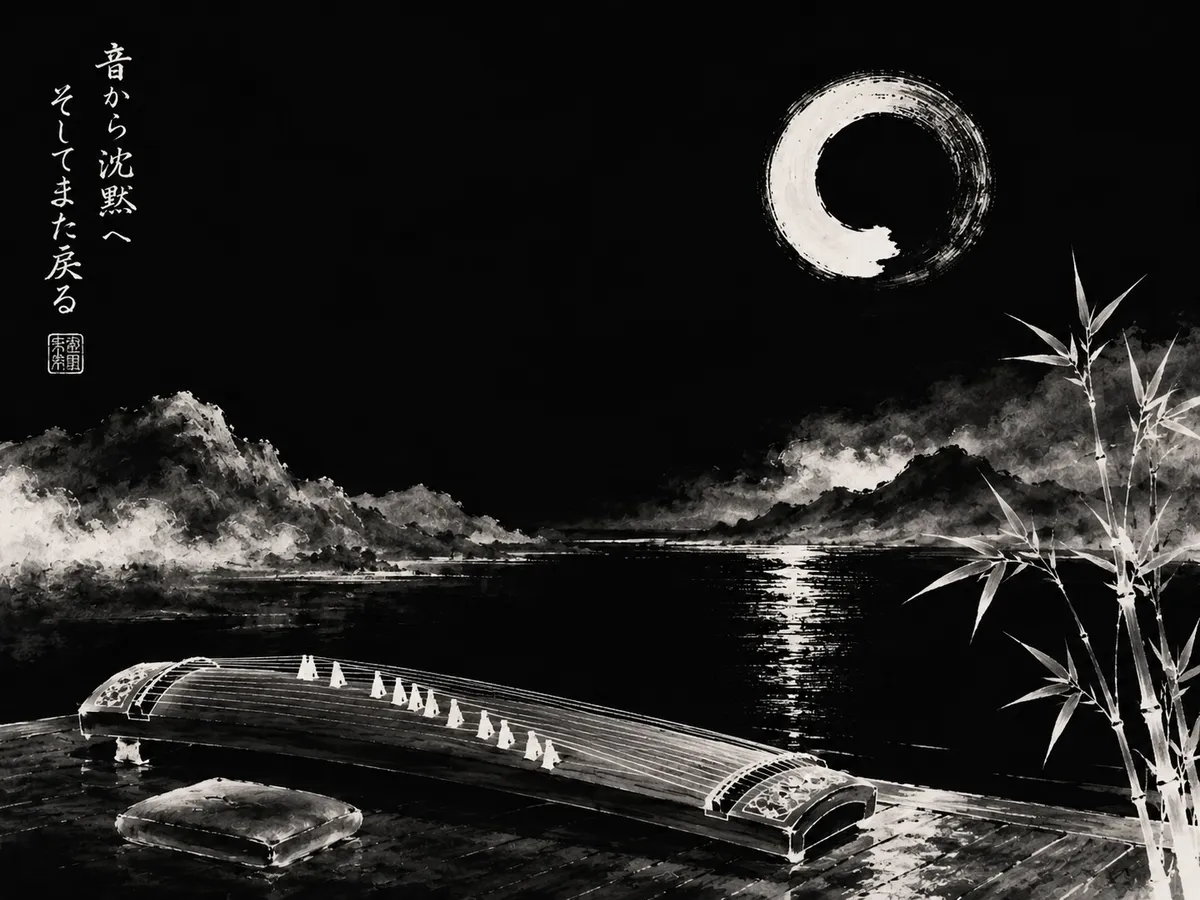
A few days ago, I found myself listening once again to Snarky Puppy. Their music is astonishing: the ensemble playing is effortless, the rhythmic precision breathtaking, and the joy they take in making music is contagious. Few contemporary groups display such generosity toward one another. Each musician shines, yet always in service of the whole.
As I listened, however, a question quietly arose: What does all of this ultimately lead to?
It is not a criticism of Snarky Puppy. The same question could be asked of Bach, Beethoven, Coltrane, Indian classical music, Gregorian chant, or the most sublime Vedic recitation. Music is one of humanity's greatest achievements. But can it take us beyond itself?
Shakespeare placed into Macbeth's mouth those haunting words:
"Life's but a walking shadow... a tale told by an idiot, full of sound and fury, signifying nothing."
Macbeth speaks from despair, not wisdom. Yet the phrase lingered with me.
Is music, too, ultimately just "full of sound and fury"? Perhaps the answer depends upon where we stand.
In the relative world, music has immense value. It explores the landscape of human feeling with extraordinary subtlety. Joy, sorrow, longing, devotion, triumph, tenderness—music gives shape to emotions that ordinary language can scarcely touch. It refines the heart. It teaches listening. It reminds us that beauty exists.
In that sense, music is not merely entertainment; it is emotional and aesthetic education. But emotions themselves belong to the relative order of experience. They arise and pass away like clouds crossing the sky.
Must music, too, eventually be left behind?
The sages of India often speak of a progression. At first, sound is indispensable. We chant mantras. We sing hymns. We recite the Vedas. We listen to the guru's words. Sound becomes a means of purifying and steadying the mind.
Then sound becomes subtler. The syllable ĀŪṀ points beyond itself. The attention turns inward toward silence—not merely the absence of sound, but the presence in which every sound appears.
Finally, even the means are relinquished.
The Māṇḍūkya Upaniṣad culminates not in another teaching, but in amātra—the "measureless," symbolized by the silence after ĀŪṀ. Śaṅkarācārya explains that this silence does not produce Brahman. It simply points toward what was never absent.
The same may be true of music. Its highest purpose is not to create Truth, but to prepare us to notice what remains when the last note has faded.
At first glance, this may seem to diminish music. I think it does the opposite.
If we expect music to grant lasting fulfillment, we burden it with an impossible task. No arrangement of sounds, however beautiful, can satisfy the longing for that which is beyond change.
But when music is freed from that impossible expectation, it becomes something altogether different: it becomes a gift.
I once thought that spiritual life consisted of ever more refined experiences: better meditation; deeper absorption; more exalted states.
Over time, that assumption quietly dissolved. One does not strive in order to attain silence; one strives until striving exhausts itself. Not because it has reached a goal, but because it finally reveals the silence that was present throughout.
This is a subtle but important distinction: silence is not waiting at the end of the path; it is present during every step of the journey.
Like the screen behind a film, it is not something encountered after the final scene. Every image has always appeared upon it. The Path merely teaches us where to look.
The Buddha compared his teaching to a raft used to cross a river. Once the crossing is complete, one does not continue carrying the raft on one's back. One leaves it behind.
What struck me recently was not simply the image of leaving the raft, but the spirit in which one leaves it: not with contempt; not with disappointment. With gratitude.
The raft was never the destination; neither was it a mistake. It carried us exactly as far as it needed to. In gratitude, one leaves the raft on the bank of the other shore.
Yet even that beautiful metaphor finally dissolves. For after leaving the raft, where is there to go? From the seeker's perspective, there is another shore. From the standpoint of Advaita, there never was.
The river itself belonged to ignorance.
Gauḍapāda expresses this with astonishing boldness:
There is no origination, no cessation, no one bound, no spiritual practitioner, no seeker of liberation, and no liberated one. This is the highest truth.
The journey was a compassionate appearance within the teaching; reality itself never moved.
And perhaps that is why the sages become so quiet. Not because they have nothing to say, but because language has completed its work.
Music, too, may complete its work. It does not fail; it fulfills its purpose. Then it returns to silence.
Curiously, that is not the end of music. It is the beginning of hearing it differently.
When nothing further is sought, music no longer needs to transport us somewhere else. It no longer bears the impossible burden of delivering enlightenment or permanent happiness.
It is simply music: a Bach fugue; a village child singing; a Vedic chant; a jazz improvisation by Snarky Puppy. Each is appreciated completely, yet none is mistaken for the Absolute.
Silence has not replaced music. It has revealed itself as the ground in which music always appeared.
Perhaps this is why the final stage is not called renunciation. It is gratitude.
One leaves the raft on the bank—not because it was inadequate, but because it has already accomplished everything it was meant to accomplish.
And then...
There is nowhere left to go.